
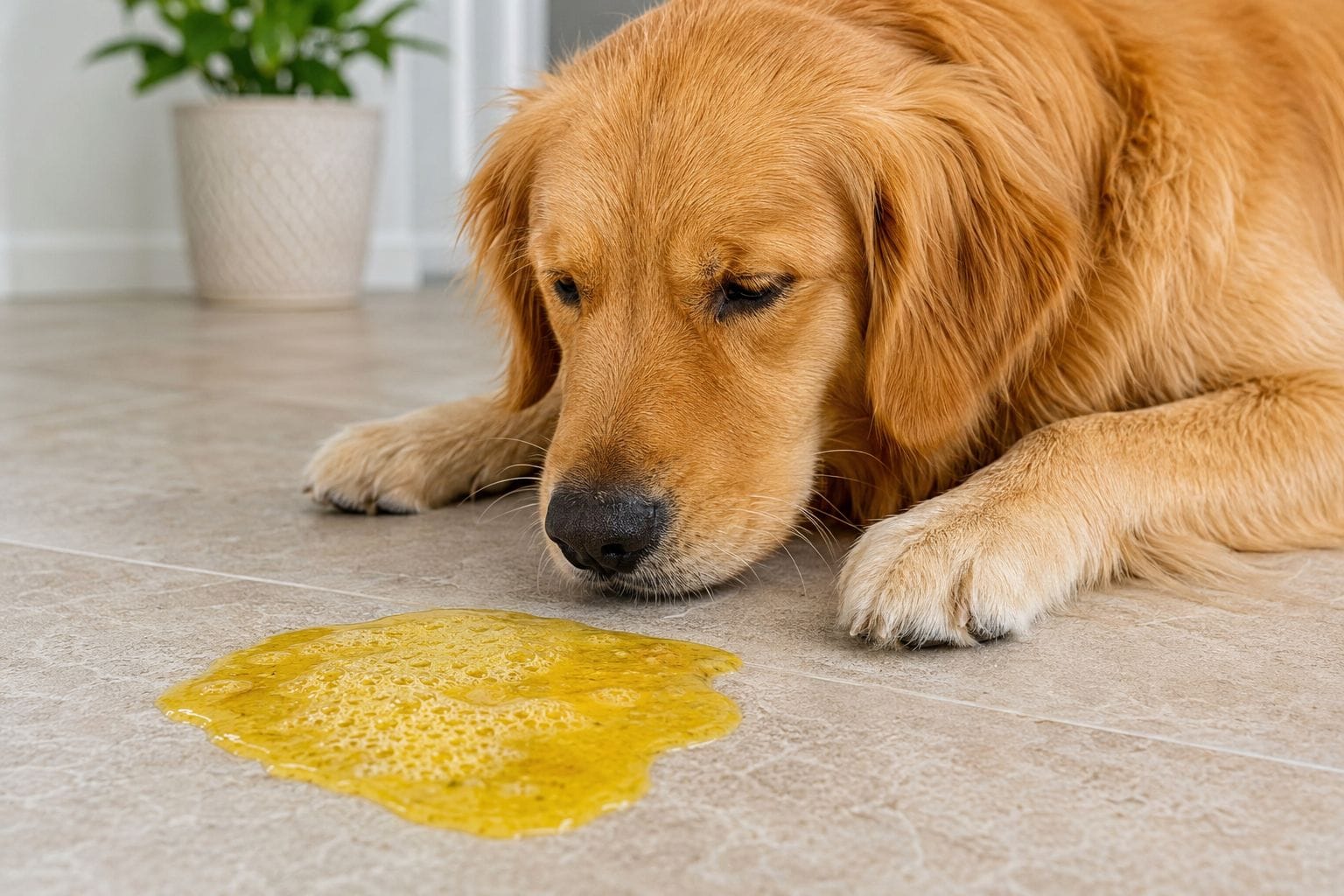
If you’ve ever woken up to find a puddle of yellow vomit on the floor, you’re probably asking yourself, “Why is my dog throwing up yellow bile?” Seeing your dog vomit can be alarming, especially when the vomit is bright yellow or foamy.
The good news is that yellow bile isn’t always a sign of a serious problem. In many cases, dogs throw up yellow bile because their stomach has been empty for too long. However, frequent vomiting or other symptoms can sometimes indicate an underlying health condition that needs veterinary attention.
In this guide, we’ll explain why dogs throw up yellow bile, the most common causes, how to help your dog, and when it’s time to call your veterinarian.
In This Article
What Is Yellow Bile?
Bile is a digestive fluid produced by the liver and stored in the gallbladder. Its main job is to help your dog digest fats and absorb certain nutrients.
Normally, bile moves from the gallbladder into the small intestine during digestion. However, when the stomach is empty or irritated, bile can move backward into the stomach, causing nausea and vomiting.
This is why your dog’s vomit may appear:
- Bright yellow
- Yellow-green
- Foamy
- Watery
Many owners describe it as yellow foam or yellow liquid.
Why Is My Dog Throwing Up Yellow Bile? 8 Common Causes
1. Empty Stomach Syndrome (Bilious Vomiting Syndrome)
One of the most common reasons for dog vomiting yellow bile is Bilious Vomiting Syndrome.
This condition happens when a dog’s stomach remains empty for a long period of time. The bile irritates the stomach lining, leading to nausea and vomiting.
Dogs with this condition often:
- Throw up yellow bile in the morning
- Vomit before breakfast
- Feel better after eating
If your dog throws up yellow bile occasionally and then acts completely normal, an empty stomach may be the cause.
2. Eating Too Fast
Some dogs eat their food so quickly that they swallow large amounts of air. This can upset the stomach and sometimes lead to vomiting, including yellow bile.
Slow feeder bowls and smaller meals can often help.
3. Dietary Indiscretion
Dogs are curious and often eat things they shouldn’t.
Eating garbage, spoiled food, grass, or table scraps can irritate the stomach and cause vomiting.
Many owners also ask:
Why is my dog throwing up yellow bile and eating grass?
Some dogs eat grass when they feel nauseous. Others simply enjoy the taste. Occasional grass eating is usually harmless, but repeated vomiting should be discussed with your veterinarian.
4. Sudden Diet Changes
Changing your dog’s food too quickly can upset the digestive system.
A sudden switch may cause:
- Vomiting
- Diarrhea
- Gas
- Loss of appetite
Whenever possible, transition to a new food gradually over seven to ten days.
5. Gastroenteritis
Gastroenteritis means inflammation of the stomach and intestines.
It can be caused by:
- Viruses
- Bacteria
- Parasites
- Eating something irritating
In addition to yellow vomit, your dog may also experience:
- Diarrhea
- Lethargy
- Loss of appetite
- Abdominal discomfort
6. Food Allergies or Sensitivities
Some dogs have sensitive stomachs and react poorly to certain ingredients.
Common triggers include:
- Beef
- Chicken
- Dairy products
- Wheat
- Artificial additives
Food sensitivities can cause repeated episodes of yellow vomiting in dogs, along with itching, diarrhea, or ear infections.
7. Pancreatitis
Pancreatitis is inflammation of the pancreas and can be serious.
It is often triggered by fatty foods or table scraps.
Symptoms include:
- Throwing up yellow bile
- Severe lethargy
- Abdominal pain
- Diarrhea
- Loss of appetite
This condition requires immediate veterinary care.
8. Intestinal Blockage
If your dog has swallowed a toy, sock, bone, or another foreign object, an intestinal blockage may develop.
This is a medical emergency.
Signs include:
- Repeated vomiting
- Yellow bile vomiting
- Weakness
- Refusing food
- Abdominal pain
Seek veterinary attention immediately if you suspect your dog has eaten something it shouldn’t have.
Why Is My Dog Throwing Up Yellow Bile but Acting Normal?
Many dog owners are surprised when their dog vomits yellow bile and then acts completely fine afterward.
In many cases, this happens because:
- The stomach was empty.
- The dog went too long between meals.
- Mild stomach irritation occurred.
If your dog vomits once and quickly returns to normal behavior, there may not be an emergency.
However, frequent vomiting should never be ignored.
Why Is My Dog Throwing Up Yellow Bile in the Morning?
This is one of the most common questions veterinarians hear.
When a dog goes many hours without eating overnight, bile can build up and irritate the stomach.
This often leads to:
- Vomiting first thing in the morning
- Yellow foam vomit
- Vomiting before breakfast
Feeding a small snack before bedtime may help prevent this issue.
Why Is My Dog Throwing Up Yellow Foam?
Yellow foam is usually a mixture of:
- Bile
- Stomach acid
- Mucus
- Air
Dog throwing up yellow foam can happen for many of the same reasons as yellow liquid vomit, including:
- Empty stomach
- Mild stomach upset
- Eating grass
- Gastroenteritis
- Dietary indiscretion
When Is Yellow Vomit an Emergency?
Contact your veterinarian immediately if your dog:
- Vomits repeatedly
- Cannot keep water down
- Has blood in the vomit
- Has severe diarrhea
- Appears weak or lethargic
- Has a swollen or painful abdomen
- Stops eating
- Has difficulty breathing
- Is a puppy or senior dog with repeated vomiting
These symptoms may indicate a serious underlying condition.
How to Help a Dog Throwing Up Yellow Bile
If your dog has vomited only once and is otherwise acting normal, you can try the following:
Feed Smaller Meals
Instead of one or two large meals, divide your dog’s daily food into several smaller meals.
Offer a Bedtime Snack
This can help prevent dog throwing up yellow bile in the morning.
Keep Your Dog Hydrated
Provide plenty of fresh water.
Avoid Fatty Foods
Table scraps and rich foods can trigger stomach upset.
Prevent Scavenging
Try to stop your dog from eating garbage, spoiled food, or unknown objects.
How Veterinarians Diagnose Yellow Vomiting
If the vomiting continues, your veterinarian may recommend:
- Physical examination
- Blood tests
- Fecal examination
- X-rays
- Ultrasound
- Additional diagnostic tests if needed
The goal is to determine whether the vomiting is caused by a simple upset stomach or a more serious condition.
How to Prevent Your Dog From Throwing Up Yellow Bile
You may be able to reduce episodes of yellow vomiting by:
- Feeding smaller meals throughout the day.
- Giving a bedtime snack.
- Avoiding sudden food changes.
- Preventing access to garbage.
- Feeding a high-quality diet.
- Keeping your dog on a regular feeding schedule.
Frequently Asked Questions
Why is my dog throwing up yellow bile but acting normal?
An empty stomach is often the cause, especially if your dog feels better immediately afterward.
Can an empty stomach cause yellow vomit?
Yes. This is one of the most common causes of dog vomiting yellow bile.
Why does my dog throw up yellow bile every morning?
This may be a sign of Bilious Vomiting Syndrome, which occurs when bile irritates an empty stomach.
Should I feed my dog after vomiting yellow bile?
If your dog only vomited once and seems normal, offering a small meal later may help. If vomiting continues, contact your veterinarian.
Is yellow bile in dogs serious?
Not always. Occasional vomiting may be harmless, but repeated vomiting or other symptoms should be evaluated by a veterinarian.
Final Thoughts
So, why is your dog throwing up yellow bile?
In many cases, the answer is simple: an empty stomach, mild stomach irritation, or eating something that didn’t agree with them. However, frequent vomiting, lethargy, diarrhea, or abdominal pain may indicate a more serious condition.
Pay attention to how often your dog vomits, any other symptoms they may have, and whether the problem keeps returning. If you’re ever unsure, it’s always best to contact your veterinarian.
Most importantly, remember that occasional yellow bile vomiting is fairly common in dogs and doesn’t automatically mean something is seriously wrong—but persistent vomiting should never be ignored.