
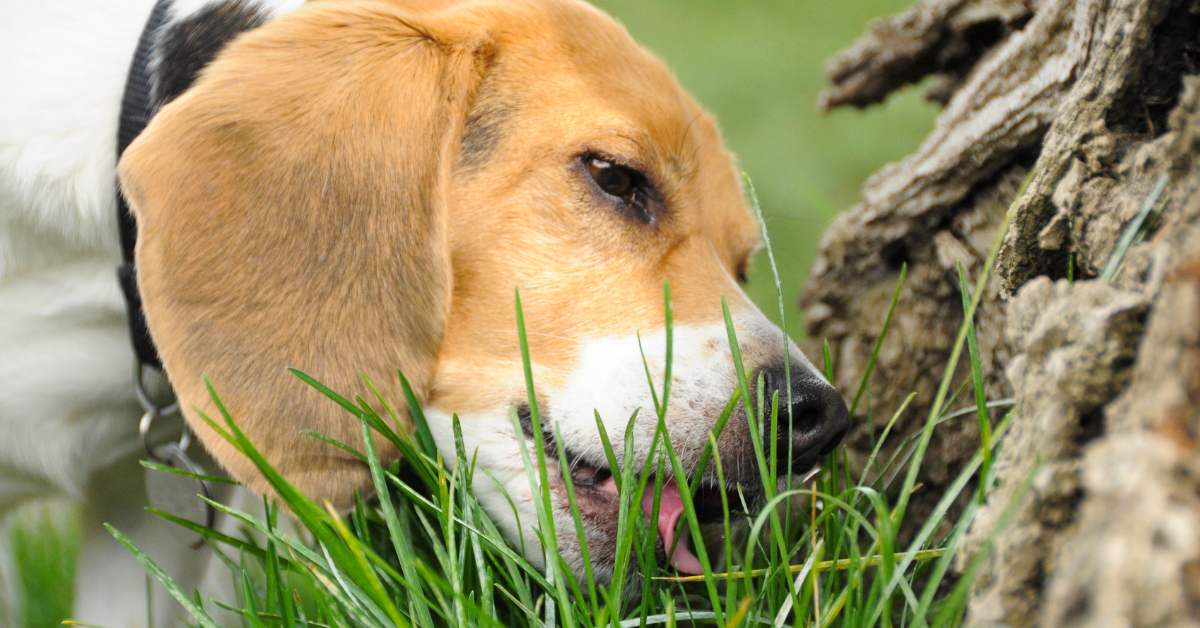
If you’ve ever caught your dog happily munching on grass during a walk, you’re not alone. Many dog owners wonder, “Why does my dog eat grass?” and worry that it could be a sign of illness. The good news is that grass eating is actually very common in dogs, and in most cases, it’s completely normal.
Dogs of all ages and breeds may occasionally nibble on grass. Some dogs do it every once in a while, while others seem to make a salad out of your lawn every day. Although the exact reason isn’t fully understood, experts believe there are several possible explanations, ranging from simple curiosity to digestive issues.
Here’s what you need to know about why dogs eat grass, when it’s harmless, and when it may be time to call your veterinarian.
In This Article
Is It Normal for Dogs to Eat Grass?
Yes, in most cases, eating grass is considered normal behavior in dogs.
Studies have found that most dogs that eat grass don’t appear to be sick beforehand, and only a small number vomit afterward. This suggests that dogs aren’t necessarily eating grass because they’re trying to make themselves throw up.
Many veterinarians consider grass eating to be a natural behavior that doesn’t usually require treatment. If your dog occasionally chews on a few blades of grass and otherwise seems healthy, there’s generally no reason to worry.
However, if the behavior suddenly becomes excessive or is accompanied by other symptoms, it’s worth paying closer attention.
9 Reasons Why Dogs Eat Grass
1. They Simply Like the Taste
Believe it or not, some dogs eat grass because they enjoy it.
Fresh, tender grass can have an appealing texture and taste. Some dogs seem to prefer young spring grass, while others may chew on certain types of plants in your yard.
Just as people enjoy different foods, dogs can develop preferences too.
2. It’s an Instinct From Their Wild Ancestors
Dogs are descendants of wolves and other wild canines, which often consume plant material as part of their diets.
Wild canids sometimes eat the stomach contents of their prey, which may contain grasses and plants. Some researchers believe that domestic dogs have retained this instinct over thousands of years.
Eating grass may simply be a natural behavior that has been passed down through generations.
3. They Have an Upset Stomach
One of the most common theories is that dogs eat grass when they don’t feel well.
Some owners notice that their dogs eat grass and then vomit shortly afterward. However, research suggests that most dogs are not actually sick before eating grass.
Still, it’s possible that certain dogs may instinctively seek out grass when they have mild stomach discomfort, nausea, or indigestion.
If your dog occasionally eats grass and vomits once, it’s usually not a cause for concern. Frequent vomiting, however, should be evaluated by your veterinarian.
4. They Need More Fiber
Fiber plays an important role in digestive health.
Some experts believe that dogs may seek out grass because they need additional fiber in their diet. Fiber helps move food through the digestive system and can support regular bowel movements.
In some cases, switching to a high-quality, balanced diet with adequate fiber may reduce grass-eating behavior.
If you think your dog may have digestive issues, speak with your veterinarian before making major dietary changes.
5. They’re Bored
A bored dog will often find ways to entertain itself.
If your dog spends long periods alone in the yard or doesn’t get enough exercise and mental stimulation, eating grass may simply become an activity to pass the time.
Dogs need daily exercise, training sessions, and interactive play to stay mentally and physically healthy.
Increasing your dog’s activity level may help reduce unwanted behaviors, including excessive grass eating.
6. They’re Curious
Puppies and young dogs explore the world with their mouths.
They chew sticks, leaves, dirt, and sometimes grass simply because they’re curious about their environment.
For many puppies, eating grass is just another part of learning about the world around them. Most eventually grow out of the behavior.
If your puppy occasionally nibbles on grass and otherwise seems healthy, it’s usually nothing to worry about.
7. They Want Attention
Dogs are smart and quickly learn what gets a reaction from their owners.
If every time your dog eats grass you immediately rush over, talk to them, or chase them away, they may learn that eating grass is an easy way to get your attention.
This doesn’t mean your dog is being naughty. They may simply enjoy interacting with you.
Try rewarding desirable behaviors instead of giving extra attention to the grass eating itself.
8. They’re Feeling Stressed or Anxious
Some dogs develop repetitive behaviors when they’re anxious or stressed.
Changes in routine, moving to a new home, separation anxiety, or a lack of stimulation can all contribute to unusual behaviors, including excessive grass eating.
If your dog suddenly starts eating a lot of grass and also shows signs of anxiety, addressing the underlying stress may help.
Providing regular exercise, enrichment toys, and a predictable routine can make a big difference.
9. It’s Become a Habit
For some dogs, eating grass simply becomes part of their daily routine.
If the behavior has never caused any problems and your dog remains healthy, it may just be a harmless habit.
Many dogs continue eating small amounts of grass throughout their lives without developing any health issues.
Why Does My Dog Eat Grass and Then Vomit?
Many owners become worried when their dog eats grass and throws up.
Although this behavior can look alarming, occasional vomiting after eating grass isn’t unusual. The grass may irritate the stomach or trigger a gag reflex in some dogs.
However, experts don’t believe that most dogs intentionally eat grass to make themselves vomit.
You should contact your veterinarian if your dog:
- Vomits repeatedly
- Has diarrhea
- Appears lethargic
- Refuses to eat
- Seems to be in pain
- Has a swollen abdomen
- Continues eating large amounts of grass every day
These symptoms may indicate an underlying medical issue that needs attention.
Is Eating Grass Dangerous for Dogs?
Grass itself is usually not dangerous.
The real concern is what may be on the grass.
Your dog could be exposed to:
- Pesticides
- Herbicides
- Fertilizers
- Toxic plants
- Parasites
- Bacteria
Never allow your dog to eat grass that has been treated with chemicals or is growing in areas where potentially harmful substances may have been used.
If possible, supervise your dog outdoors and discourage them from eating grass in unfamiliar places.
When Should You Worry?
Most of the time, occasional grass eating isn’t a reason to panic.
However, you should contact your veterinarian if your dog:
- Suddenly starts eating excessive amounts of grass
- Vomits frequently
- Has diarrhea
- Loses weight
- Appears tired or weak
- Stops eating regular food
- Shows signs of abdominal pain
These symptoms could point to digestive problems, nutritional deficiencies, or other health conditions that require professional evaluation.
How to Stop Your Dog From Eating Grass
If your dog eats grass occasionally and is healthy, you may not need to stop the behavior at all.
However, if you’d like to reduce it, try these tips:
- Provide more daily exercise.
- Offer puzzle toys and mental stimulation.
- Feed a balanced, high-quality diet.
- Increase supervised playtime.
- Teach commands such as “leave it.”
- Speak with your veterinarian if the behavior becomes excessive.
The goal isn’t necessarily to eliminate grass eating completely but to ensure your dog stays healthy and safe.
Frequently Asked Questions
Why does my dog eat grass every day?
Some dogs simply enjoy the taste or have made it part of their routine. If your dog is healthy and showing no other symptoms, daily grass eating may be harmless.
Why is my dog suddenly eating grass?
A sudden change in behavior could be related to boredom, stress, digestive discomfort, or a dietary issue.
Why does my puppy eat grass?
Puppies often eat grass out of curiosity as they explore their environment.
Can dogs digest grass?
Dogs can digest small amounts of grass, but large quantities may pass through the digestive system mostly unchanged.
Should I stop my dog from eating grass?
Occasional grass eating is usually normal. The biggest concern is exposure to chemicals, parasites, or excessive consumption combined with other symptoms.
Final Thoughts
So, why does your dog eat grass?
The answer isn’t always simple. Your dog may enjoy the taste, be following natural instincts, relieving boredom, or experiencing mild digestive discomfort. In most cases, occasional grass eating is perfectly normal and isn’t a sign of serious illness.
The best thing you can do is monitor your dog’s behavior, ensure they’re eating a balanced diet, and watch for any unusual symptoms. If your dog suddenly begins eating excessive amounts of grass or develops vomiting, diarrhea, or other signs of illness, it’s always best to consult your veterinarian.
For most dogs, though, a few bites of grass are simply another quirky part of being a dog.