
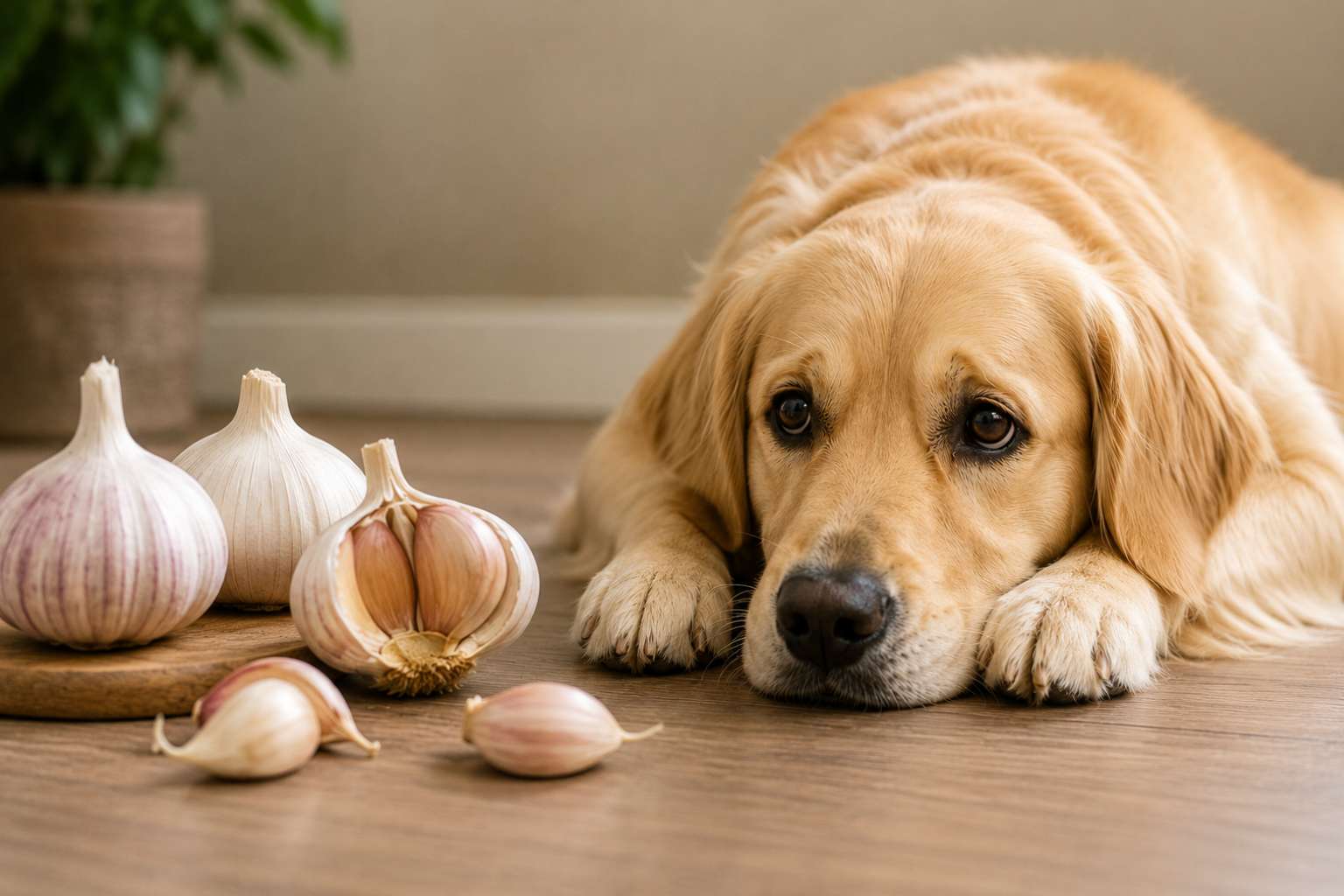
Have you ever dropped a piece of garlic bread on the floor only to watch your dog snatch it up before you could react? Moments like this can leave any pet owner feeling anxious. You may immediately wonder, can dogs eat garlic, or has your furry friend just eaten something dangerous?
The short answer is no. Garlic is considered toxic to dogs and should never be part of their diet. While a tiny amount may not always cause severe poisoning, there is no truly safe amount that veterinarians recommend. The risk depends on your dog’s size, the amount consumed, and the form of garlic they ate.
In this guide, you’ll learn why garlic is dangerous, how much is considered toxic, the warning signs of poisoning, and the steps you should take if your dog accidentally eats garlic.
In This Article
Can Dogs Eat Garlic?
The answer to can dogs eat garlic is simple: dogs should not eat garlic. Garlic belongs to the Allium family, which also includes onions, leeks, chives, and shallots. Although these vegetables offer health benefits for people, they can seriously harm your dog’s health.
Garlic contains natural sulfur compounds that damage red blood cells in dogs. When enough red blood cells are destroyed, the body cannot carry oxygen efficiently, leading to a condition called hemolytic anemia.
Every form of garlic can be harmful, including:
- Raw garlic cloves
- Cooked garlic
- Roasted garlic
- Garlic powder
- Garlic salt
- Garlic butter
- Garlic supplements
- Garlic seasoning found in prepared foods
One important fact many owners don’t realize is that garlic powder is even more concentrated than fresh garlic, making it especially dangerous even in small quantities.
Why Is Garlic Dangerous for Dogs?
Garlic contains compounds known as organosulfur compounds. When your dog digests garlic, these substances enter the bloodstream and begin damaging red blood cells through a process called oxidative stress.
Healthy red blood cells carry oxygen throughout your dog’s body. When garlic destroys these cells faster than the body can replace them, anemia develops. Without enough oxygen, vital organs cannot function properly.
This is why garlic poisoning should never be ignored, even if your dog seems perfectly normal at first.
Garlic Is More Toxic Than Many Owners Think
Many people assume onions are the biggest concern, but garlic is actually more toxic. Gram for gram, garlic contains higher concentrations of the compounds responsible for poisoning.
Because of this increased potency, even foods that contain small amounts of garlic seasoning deserve attention.
Examples include:
- Pizza
- Pasta sauce
- Garlic bread
- Soups
- Gravy
- Burgers
- Frozen meals
- Seasoning blends
- Meatloaf
- Sausages
Always read ingredient labels before sharing any human food with your dog.
How Much Garlic Is Toxic to Dogs?
One of the most common questions veterinarians hear is, how much garlic is toxic to dogs?
There isn’t a single answer because toxicity depends on several factors:
- Your dog’s weight
- Age
- Overall health
- Breed
- Amount consumed
- Whether the garlic was fresh, cooked, or powdered
Small dogs face a much higher risk because their bodies require far less garlic to reach toxic levels.
| Dog Size | Risk Level |
|---|---|
| Under 10 pounds | Very high |
| 10–25 pounds | High |
| 25–50 pounds | Moderate |
| Over 50 pounds | Lower, but still dangerous |
Even if your dog appears healthy after eating garlic, you should still contact your veterinarian for guidance.
What Happens If a Dog Eats Garlic?
If your dog eats garlic, symptoms may not appear immediately. In many cases, poisoning develops gradually over several hours or even several days.
Early Symptoms
Watch carefully for:
- Vomiting
- Diarrhea
- Excessive drooling
- Loss of appetite
- Stomach discomfort
- Lethargy
These signs may seem mild, but they can quickly progress if enough garlic was consumed.
Serious Symptoms
As red blood cells continue to break down, more severe symptoms may develop, including:
- Weakness
- Pale gums
- Rapid heartbeat
- Fast breathing
- Dark-colored urine
- Collapse
- Difficulty exercising
- Yellowing of the gums or eyes
These symptoms require immediate veterinary attention.
How Long Does Garlic Poisoning Take to Appear?
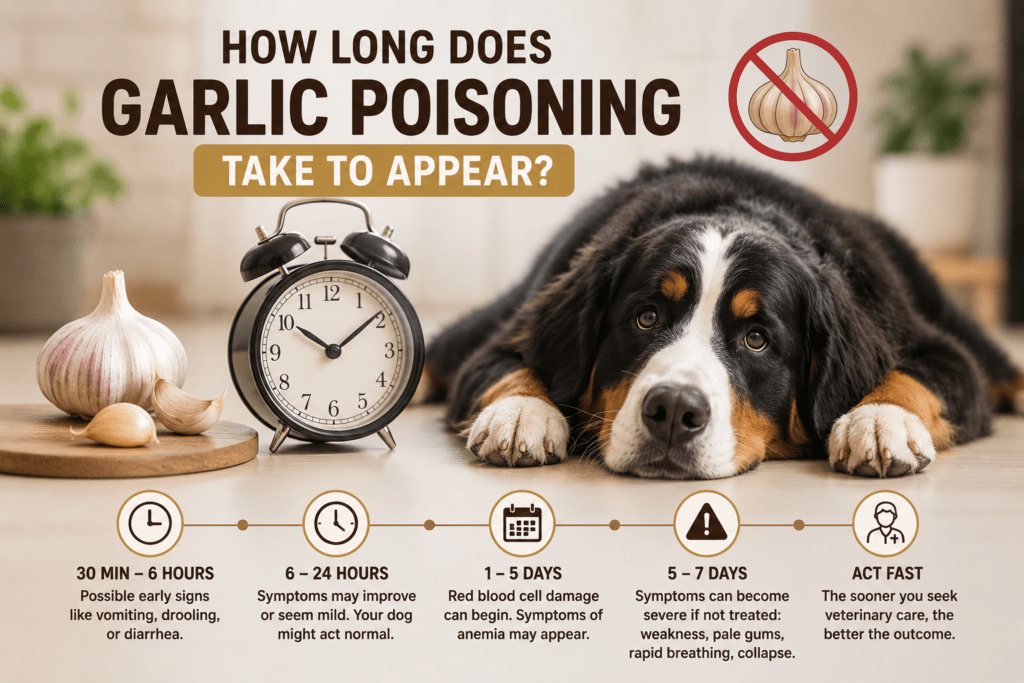
One of the dangerous aspects of garlic poisoning is the delay in symptoms.
Some dogs experience stomach upset within a few hours, while others appear completely normal for two to five days before anemia develops.
This delay often gives owners a false sense of security.
Even if your dog seems perfectly fine after eating garlic, the toxic compounds may already be damaging red blood cells behind the scenes. That’s why monitoring your pet closely and contacting your veterinarian is always the safest choice.
What Should You Do If Your Dog Eats Garlic?
If you know or suspect your dog has eaten garlic, don’t panic. Acting quickly gives your dog the best chance of a full recovery.
Follow these steps:
- Stay calm and remove any remaining garlic.
- Estimate how much your dog ate.
- Determine whether it was raw, cooked, powdered, or part of another food.
- Contact your veterinarian immediately.
- Follow your veterinarian’s instructions carefully.
- Never try to make your dog vomit unless a veterinary professional specifically tells you to do so.
The sooner treatment begins, the better the outcome for your dog.
How Veterinarians Treat Garlic Poisoning in Dogs
If you’re asking can dogs eat garlic because your pet has already swallowed some, don’t wait until symptoms become severe. The sooner your veterinarian examines your dog, the better the chances of a full recovery.
Treatment depends on several factors, including:
- Your dog’s weight
- The amount of garlic eaten
- Whether it was fresh garlic, cooked garlic, or garlic powder
- How much time has passed since ingestion
- Whether symptoms have already developed
If the garlic was eaten recently, your veterinarian may safely induce vomiting to remove it from your dog’s stomach. In some cases, activated charcoal may be used to reduce toxin absorption.
Dogs showing signs of garlic poisoning in dogs often require additional care, including:
- Intravenous (IV) fluids
- Oxygen therapy
- Blood tests to monitor red blood cells
- Medications to control vomiting
- Hospital observation
- Blood transfusions in severe cases
Prompt treatment greatly improves the outcome. Waiting until your dog becomes weak or collapses can make recovery much more difficult.
Which Garlic Products Are Dangerous for Dogs?
Many owners only think about fresh garlic cloves, but the truth is that almost every garlic product can be harmful. If you’re still wondering, can dogs eat garlic when it’s mixed into another food, the answer is still no.
The following products should never be shared with your dog:
- Raw garlic cloves
- Cooked garlic
- Roasted garlic
- Garlic powder
- Garlic salt
- Garlic butter
- Garlic bread
- Garlic seasoning
- Garlic supplements
- Pizza
- Pasta sauce
- Soups
- Gravy
- Frozen dinners
- Meatloaf
- Burgers
- Sausages
- Fried rice
- Seasoning mixes
Garlic powder deserves special attention because it is highly concentrated. Even a small sprinkle can contain more toxic compounds than a fresh garlic clove.
Whenever you prepare meals at home, double-check ingredients before offering your dog a bite.
Can Dogs Eat Cooked Garlic?
Many people believe cooking removes harmful compounds, but that’s a dangerous myth.
Can dogs eat garlic after it has been cooked? Unfortunately, no.
Roasting, boiling, frying, or baking garlic does not eliminate the sulfur compounds responsible for poisoning. Whether it’s mixed into vegetables, meat dishes, casseroles, or sauces, cooked garlic remains unsafe for dogs.
Foods that commonly contain cooked garlic include:
- Spaghetti sauce
- Garlic mashed potatoes
- Chicken marinades
- Stir-fries
- Roasted vegetables
- Garlic shrimp
- Homemade soups
If your dog accidentally eats a meal containing cooked garlic, contact your veterinarian instead of assuming the cooking process made it harmless.
Can Dogs Eat Garlic Bread?
One of the most searched questions online is can dogs eat garlic bread.
The answer is no.
Garlic bread combines several ingredients that aren’t ideal for dogs:
- Garlic
- Butter
- Salt
- Oil
- Cheese (sometimes)
- Herbs and seasonings
Besides the risk of garlic toxicity, garlic bread is also high in fat and sodium, which may upset your dog’s stomach or even contribute to pancreatitis in sensitive dogs.
Even one slice can pose a problem for a small dog.
If your dog steals garlic bread from the table, don’t simply wait for symptoms. Call your veterinarian for advice as soon as possible.
Are Some Dogs More Sensitive to Garlic?
Although can dogs eat garlic has the same answer for every breed—no—not all dogs react exactly the same way.
Some dogs are much more vulnerable to garlic poisoning than others.
Higher-risk dogs include:
- Puppies
- Senior dogs
- Toy breeds
- Dogs with anemia
- Dogs with liver disease
- Dogs with immune disorders
Certain Japanese breeds, including Akitas and Shiba Inus, have naturally higher sensitivity to oxidative damage in red blood cells, making them especially susceptible to garlic toxicity.
Because you cannot predict how your individual dog will react, it’s safest to avoid garlic entirely.
Safe Alternatives to Garlic for Dogs
Instead of wondering can dogs eat garlic, choose healthy treats that provide nutrition without the risk.
Safe options include:
- Carrots
- Pumpkin
- Green beans
- Blueberries
- Apple slices (without seeds)
- Plain cooked chicken
- Sweet potatoes
- Cucumbers
- Watermelon (seedless)
- Plain rice
These foods can satisfy your dog’s appetite while supplying vitamins, minerals, and fiber.
Always introduce new foods gradually and in moderation.
How to Prevent Garlic Poisoning
Preventing garlic poisoning is much easier than treating it.
Follow these simple safety tips:
- Store garlic where your dog cannot reach it.
- Never feed table scraps containing garlic.
- Read ingredient labels carefully.
- Keep garbage cans securely closed.
- Tell family members not to share seasoned foods.
- Be extra cautious during holidays and family gatherings.
- Teach your dog the “leave it” command.
- Supervise curious puppies around food preparation areas.
Small precautions today can prevent a veterinary emergency tomorrow.
Can Dogs Eat Garlic? Myth vs. Fact
| Myth | Fact |
|---|---|
| Dogs can safely eat small amounts of garlic. | Can dogs eat garlic? No. Even small amounts may be harmful depending on the dog’s size. |
| Cooked garlic isn’t toxic. | Cooking does not remove the toxic compounds. |
| Garlic powder is safer than fresh garlic. | Garlic powder is actually more concentrated and can be even more dangerous. |
| Garlic supplements are healthy for dogs. | Garlic supplements can still cause poisoning. |
| Garlic naturally kills worms in dogs. | There is no reliable scientific evidence supporting this claim. |
Frequently Asked Questions About Can Dogs Eat Garlic
Can dogs eat garlic in small amounts?
No. Although a tiny amount may not always cause immediate poisoning, veterinarians do not recommend feeding garlic in any quantity. Can dogs eat garlic safely? The safest answer is no.
Can dogs eat cooked garlic?
No. Cooked garlic remains toxic because heat does not destroy the harmful sulfur compounds.
Can dogs eat garlic bread?
No. Garlic bread contains garlic, butter, and excess salt, making it an unhealthy and potentially dangerous choice.
What should I do if my dog ate garlic?
Contact your veterinarian immediately. Quick action is always safer than waiting for symptoms to develop.
How long does garlic poisoning take to appear?
Some dogs show stomach upset within hours, while others may not develop signs of anemia for two to five days.
Can puppies eat garlic?
No. Puppies are especially vulnerable because of their small size and developing bodies.
Conclusion
So, can dogs eat garlic? The answer is clear: no. Whether it’s raw, cooked, roasted, powdered, or hidden inside your favorite meal, garlic has no place in your dog’s diet. Even though symptoms may not appear immediately, the toxic compounds in garlic can silently damage red blood cells and lead to serious health complications.
If your dog accidentally eats garlic, don’t rely on internet guesses or hope everything will be fine. Contact your veterinarian promptly and monitor your pet closely. Acting early can make all the difference.
The best way to protect your furry companion is simple—keep garlic and garlic-containing foods out of reach, choose dog-safe treats instead, and stay informed about foods that can be harmful. Knowing the answer to can dogs eat garlic today could help save your dog’s life tomorrow.