

Many pet owners ask, can dogs eat watermelon as a healthy alternative to commercial treats. The answer is yes, provided the fruit is prepared correctly and served in moderation
Yes, dogs can eat watermelon, and for most healthy dogs, it can be a refreshing, nutritious treat when served correctly. The juicy pink flesh is naturally low in calories, packed with water, and contains beneficial vitamins and antioxidants that can support your dog’s overall health.
However, not every part of the fruit is safe. While the flesh is perfectly fine in moderation, watermelon seeds and the hard green rind should always be removed before feeding. Seeds may increase the risk of intestinal blockage—especially in small dogs—while the rind is difficult to digest and can lead to stomach upset or choking.
If prepared properly, watermelon can become one of the healthiest summer treats you can offer your furry friend.
In This Article
Quick Answer
| Watermelon Part | Safe for Dogs? | Notes |
|---|---|---|
| Watermelon Flesh | ✅ Yes | Healthy when served in moderation |
| Seedless Watermelon | ✅ Yes | Best choice for dogs |
| Black Seeds | ⚠ No | May cause digestive blockage if eaten in large amounts |
| White Seeds | ⚠ Small amounts | Usually pass naturally but should still be removed |
| Watermelon Rind | ❌ No | Difficult to digest and may cause choking or intestinal blockage |
| Frozen Watermelon | ✅ Yes | Great cooling treat during hot weather |
| Watermelon Juice | ⚠ Not Recommended | Often contains added sugar and lacks fiber |
Is Watermelon Good for Dogs?

Absolutely. Watermelon is one of the healthiest fruits you can share with your dog when offered as an occasional treat.
Since it contains approximately 92% water, watermelon helps keep dogs hydrated, making it an excellent snack during warm summer months. Unlike many processed treats, watermelon is naturally low in fat and cholesterol while providing important nutrients that support your dog’s health.
Remember, treats—including fruit—should make up no more than 10% of your dog’s daily calorie intake. A balanced, complete dog food should remain the main source of nutrition.
5 Amazing Health Benefits of Watermelon for Dogs
1. Keeps Your Dog Hydrated
Knowing can dogs eat watermelon safely allows you to add a nutritious, hydrating snack to your dog’s diet without unnecessary risks.
Hydration is essential for maintaining healthy body functions. During hot weather, after exercise, or following outdoor adventures, many dogs benefit from water-rich snacks.
Because watermelon is mostly water, it can help supplement your dog’s daily water intake while providing a refreshing reward.
Dogs that enjoy watermelon often appreciate its naturally juicy texture, especially on hot afternoons.
2. Rich in Vitamins and Nutrients
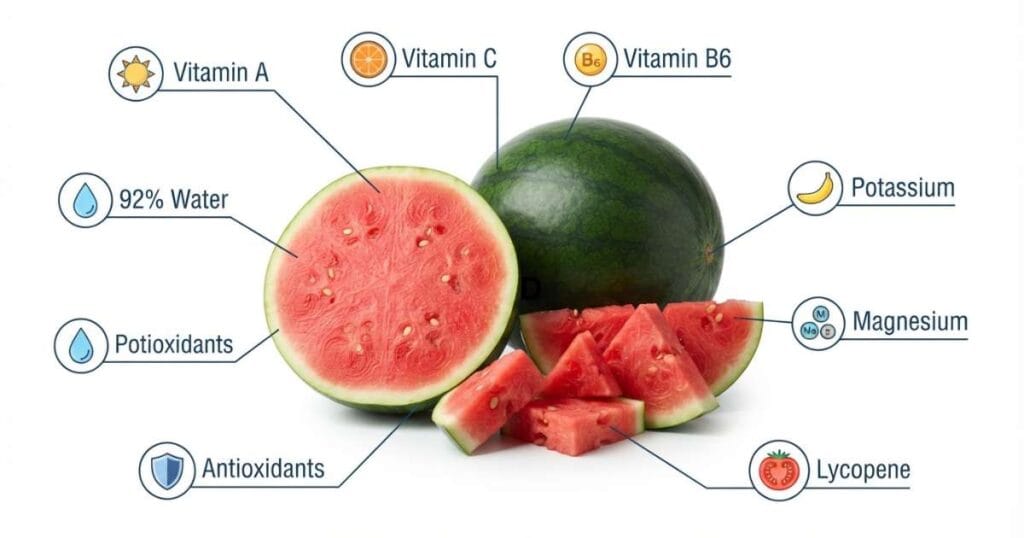
Watermelon contains several nutrients that support your dog’s overall wellness, including:
- Vitamin A for healthy skin and vision
- Vitamin C to help support normal immune function
- Vitamin B6 for energy metabolism
- Potassium for healthy muscle and nerve function
- Magnesium for normal body processes
Although dogs receive most of these nutrients from their regular diet, watermelon can provide a small nutritional boost as part of a healthy lifestyle.
3. Packed with Powerful Antioxidants
One of watermelon’s biggest advantages is its high concentration of lycopene, a natural antioxidant responsible for the fruit’s vibrant red color.
Antioxidants help protect cells from oxidative stress caused by free radicals.
Watermelon also contains beta-carotene, another antioxidant that supports healthy eyes and skin.
These compounds contribute to overall wellness as part of a balanced diet.
4. Low in Calories
If your dog enjoys treats but needs to maintain a healthy weight, watermelon is an excellent alternative to high-calorie commercial snacks.
Compared to biscuits or processed treats, watermelon provides sweetness without excessive calories or unhealthy fats.
This makes it a smart option for dogs that are overweight or on veterinarian-recommended weight management plans.
5. A Fun and Refreshing Summer Treat
Many dogs love the crunchy, juicy texture of watermelon.
You can even freeze small cubes to create a naturally cooling snack during hot summer days.
Frozen watermelon cubes are especially popular after:
- Long walks
- Trips to the park
- Hiking adventures
- Beach outings
- Backyard play sessions
Not only are they refreshing, but they also encourage hydration in a fun way.
Can Dogs Eat Watermelon Seeds?
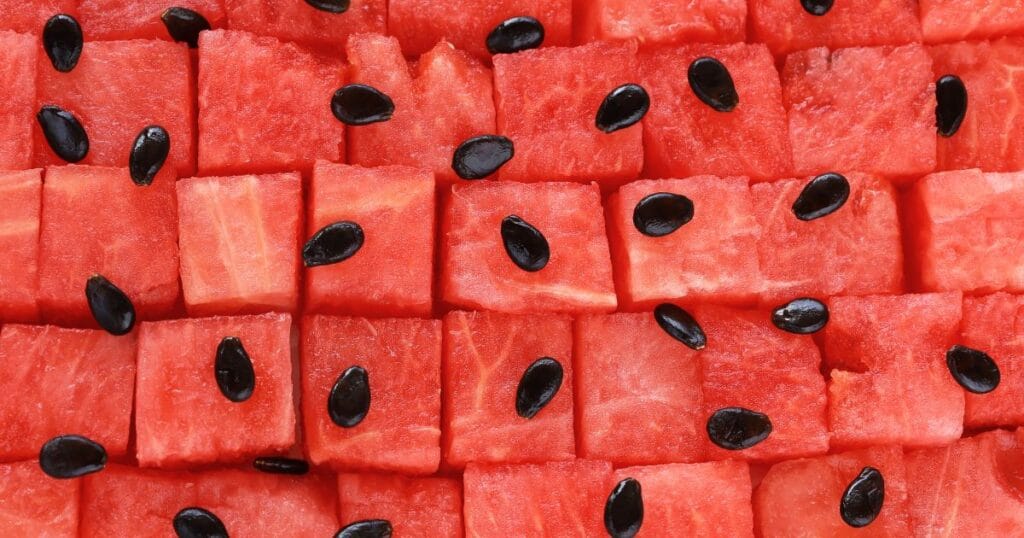
Although can dogs eat watermelon has a positive answer, the seeds should always be removed before serving.
This is one of the most common questions dog owners ask—and the answer deserves its own explanation.
Black Watermelon Seeds
Black seeds should always be removed before feeding watermelon to your dog.
Although swallowing one or two seeds is unlikely to cause problems in a large, healthy dog, consuming many seeds can increase the risk of an intestinal blockage.
Small breeds, puppies, and senior dogs are especially vulnerable because their digestive systems are smaller and more delicate.
An intestinal blockage is a serious medical condition that may require emergency veterinary treatment.
White Watermelon Seeds
White seeds are immature, softer seeds that are generally less likely to cause issues.
However, it’s still best practice to remove them whenever possible.
The safest option is always seedless watermelon.
Can Dogs Eat Watermelon Rind?

When asking can dogs eat watermelon, remember that only the pink flesh is considered safe. The rind should never be offered because it is difficult for dogs to digest.
No. Dogs should not eat watermelon rind. While the juicy pink flesh is safe, the thick green rind is tough, fibrous, and difficult for a dog’s digestive system to process.
Even if your dog seems interested in chewing on it, swallowing pieces of watermelon rind can lead to digestive problems and, in some cases, serious intestinal blockages.
Why Is Watermelon Rind Dangerous?
The rind poses several risks, including:
- Choking hazards, especially for puppies and small dogs.
- Upset stomach, including vomiting or diarrhea.
- Intestinal blockage if large pieces are swallowed.
- Difficulty digesting the tough outer skin.
If your dog accidentally eats a small bite of rind, monitor them closely for signs of discomfort. However, if they swallow a large piece or begin showing symptoms such as vomiting, loss of appetite, constipation, abdominal pain, or lethargy, contact your veterinarian immediately.
Can Puppies Eat Watermelon?
Yes, puppies can eat watermelon, but only in small amounts and with a few precautions.
Because puppies have sensitive digestive systems, introducing any new food should be done gradually. Start with one or two small seedless cubes and watch for any signs of stomach upset.
Always remember to:
- Remove all seeds.
- Remove the rind.
- Cut the watermelon into tiny bite-sized pieces.
- Feed only as an occasional treat.
If your puppy has never eaten fruit before, introduce watermelon slowly and avoid feeding multiple new foods on the same day.
How Much Watermelon Can Dogs Eat?
Even though can dogs eat watermelon safely, moderation is important. Feeding too much watermelon at once may cause digestive upset.
Although watermelon is healthy, moderation is essential.
Treats—including fruit—should make up no more than 10% of your dog’s daily calories.
Here is a general serving guide:
| Dog Size | Recommended Serving |
|---|---|
| Extra Small (under 10 lbs) | 1–2 small cubes |
| Small (10–20 lbs) | 2–4 cubes |
| Medium (20–50 lbs) | 4–6 cubes |
| Large (50–90 lbs) | 6–8 cubes |
| Giant (90+ lbs) | Up to 1 cup of seedless watermelon |
Every dog is different. If your dog has diabetes, obesity, digestive issues, or any medical condition, consult your veterinarian before adding watermelon to their diet.
How to Prepare Watermelon Safely for Dogs
Preparing watermelon correctly only takes a few minutes and helps prevent digestive problems.
Follow these simple steps:
- Wash the outside of the watermelon.
- Slice the fruit into manageable pieces.
- Remove every black and white seed.
- Cut away the entire green rind.
- Dice the pink flesh into bite-sized cubes.
- Serve fresh or freeze the cubes for a cooling summer snack.
Avoid adding sugar, salt, seasonings, whipped cream, chocolate, or artificial sweeteners.
Fresh watermelon is always the healthiest option.
Can Dogs Eat Frozen Watermelon?
Yes! Frozen watermelon is one of the best summer treats for dogs.
Freezing watermelon creates a refreshing snack that helps cool your dog during hot weather while encouraging hydration.
Frozen watermelon is especially enjoyable after:
- Long walks
- Hiking trips
- Playing outside
- Beach visits
- Dog park adventures
For smaller dogs, allow the frozen cubes to soften slightly before serving to reduce the risk of choking.
Signs Your Dog Ate Too Much Watermelon
While watermelon is generally safe, eating too much may upset your dog’s stomach.
Watch for symptoms such as:
- Vomiting
- Diarrhea
- Excessive gas
- Bloating
- Loss of appetite
- Stomach discomfort
If your dog also consumed seeds or rind and begins vomiting repeatedly, has difficulty passing stool, becomes unusually tired, or appears to be in pain, seek veterinary care immediately.
Other Safe Fruits Dogs Can Enjoy
If your dog loves watermelon, they may also enjoy other healthy fruits in moderation, including:
- Apples (without seeds or core)
- Bananas
- Blueberries
- Strawberries
- Pineapple
- Mango (without the pit)
- Cantaloupe
- Pears (without seeds)
- Cranberries
- Raspberries
Introducing different dog-friendly fruits can provide variety while supplying additional vitamins and antioxidants.
Frequently Asked Questions
Can dogs eat seedless watermelon?
Yes. Seedless watermelon is the safest option because it greatly reduces the risk of intestinal blockage. It’s still a good idea to check for any small white seeds before serving.
Can diabetic dogs eat watermelon?
Because watermelon contains natural sugars, diabetic dogs should only eat it if your veterinarian approves. Portion control is especially important.
Can dogs eat watermelon every day?
Watermelon is best offered as an occasional treat rather than a daily snack. Too much fruit may upset your dog’s digestive system.
Can dogs drink watermelon juice?
Fresh watermelon juice without added sugar isn’t toxic, but whole watermelon is a better choice because it contains fiber. Avoid store-bought watermelon juice that contains added sugars or artificial ingredients.
Can dogs eat watermelon skin?
No. The outer green skin is difficult to digest and may cause stomach problems or intestinal blockage.
Is watermelon good for overweight dogs?
Yes. Watermelon is naturally low in calories and fat, making it a healthier alternative to many commercial treats when served in moderation.
Can senior dogs eat watermelon?
Yes. Senior dogs can enjoy seedless watermelon as long as it’s cut into small, easy-to-chew pieces and fed in moderation.
What should I do if my dog accidentally eats watermelon seeds?
Eating one or two seeds is unlikely to cause problems in a healthy large dog. However, if your dog eats many seeds or begins vomiting, stops eating, or appears uncomfortable, contact your veterinarian promptly.
Conclusion
If you’ve been wondering can dogs eat watermelon, you can feel confident sharing this fruit as an occasional treat when it is served without seeds or rind.
So, can dogs eat watermelon? Yes! Watermelon is a safe, healthy, and refreshing treat when served properly. Its high water content, vitamins, antioxidants, and low calorie count make it an excellent snack for many dogs, especially during warm weather.
The key is proper preparation. Always remove the seeds and rind, serve only the juicy pink flesh, and keep portions moderate. By following these simple guidelines, you can safely share this delicious summer fruit with your furry companion.
If you’re looking for more nutrition advice, explore our guides on can dogs eat blueberries, can dogs eat bananas, can dogs eat strawberries, and what fruits can dogs eat to help your dog enjoy a varied and healthy diet.