
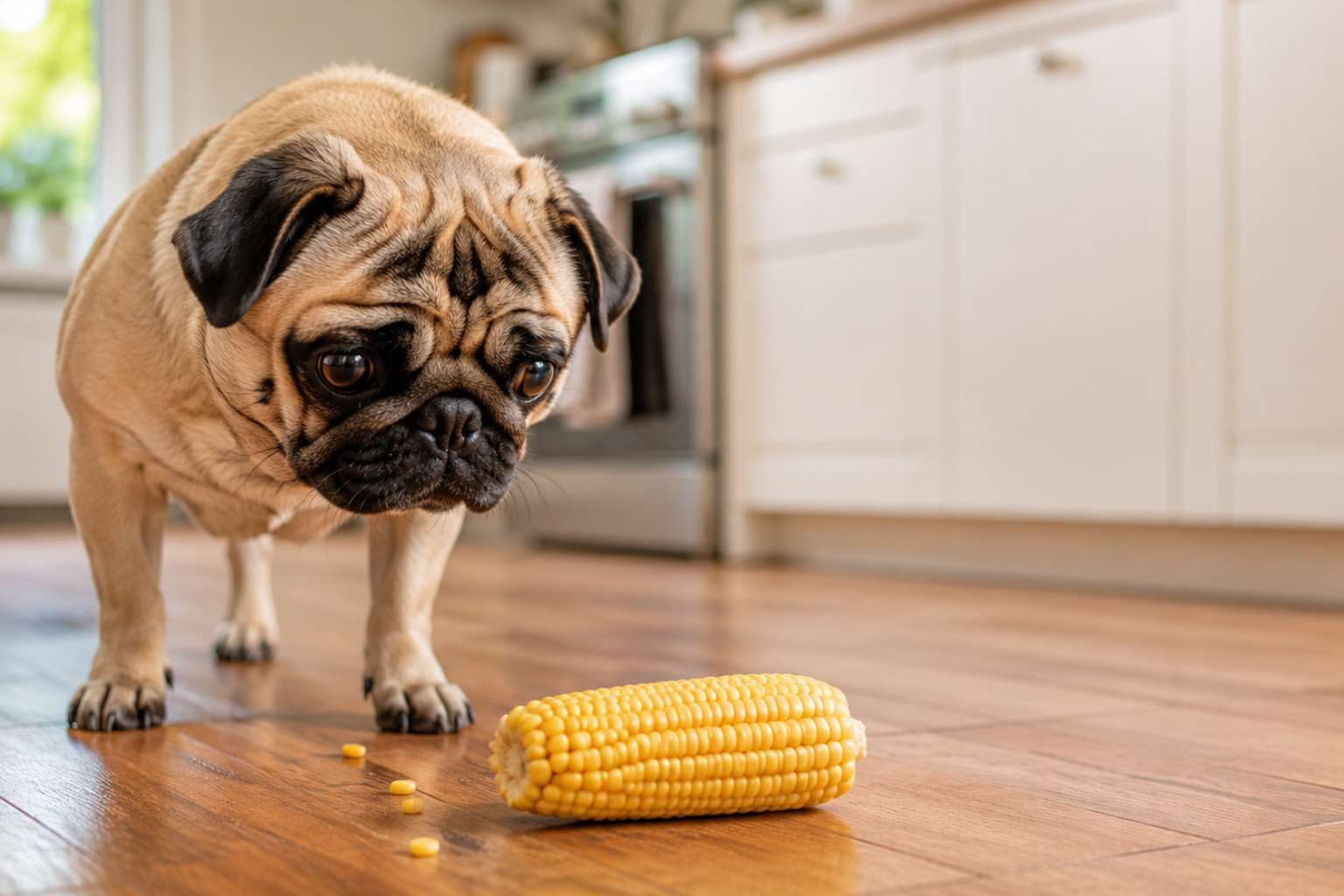
Imagine you’re enjoying a backyard barbecue, and your dog suddenly grabs a leftover corn cob before you can stop them. It happens in seconds, and your first thought might be, “It’s just corn—how dangerous could it be?” Unfortunately, that seemingly harmless cob can turn into a life-threatening emergency.
Many pet owners know that dogs enjoy human food, but few realize that corn cobs are one of the most dangerous table scraps a dog can swallow. Unlike the soft kernels, the cob cannot be digested and may become stuck in your dog’s digestive tract, leading to painful intestinal blockages and emergency surgery.
If you’re wondering can dogs eat corn cobs, the short answer is no. Understanding can dogs eat corn cobs is important because swallowing even one can become a medical emergency.
In This Article
Can Dogs Eat Corn Cobs?
No. Dogs should never eat corn cobs.
While plain corn kernels are generally safe in moderation, the cob itself is extremely dangerous. Corn cobs are made of tough, fibrous material that your dog’s stomach cannot break down.
Because many dogs swallow food without chewing it thoroughly, a corn cob can travel through the digestive system until it becomes lodged somewhere along the way. Once that happens, it can block food, water, and gas from passing normally, creating a medical emergency.
Whether your dog is small or large, swallowing a corn cob always deserves immediate attention.
Why Are Corn Cobs Dangerous for Dogs?
Many owners search can dogs eat corn cobs after their pet steals food from the table, but by then the cob may already be causing problems.
The biggest problem isn’t the corn—it’s the cob.
Corn Cobs Cannot Be Digested
Unlike digestible foods, a corn cob remains almost unchanged inside your dog’s stomach and intestines. Since it doesn’t soften or dissolve, it can easily become trapped.
Even a broken piece of cob can cause serious complications.
They Can Cause Intestinal Blockages
If you’ve been asking yourself can dogs eat corn cobs, these symptoms are a clear reminder that the answer is no and that immediate veterinary care may be necessary.
One of the greatest dangers of dogs eating corn cobs is an intestinal blockage.
A blockage prevents food and fluids from moving through the digestive tract. As pressure builds, the intestine may lose its blood supply, causing tissue damage or even rupture.
Without prompt treatment, this condition can quickly become life-threatening.
Large Dogs Are Also at Risk
Many owners assume only small breeds have problems swallowing corn cobs.
That’s not true.
Labradors, Golden Retrievers, German Shepherds, and other large breeds are famous for swallowing objects whole. Although their larger digestive systems may allow the cob to travel farther, it can still become lodged and require emergency surgery.
What Happens If a Dog Eats a Corn Cob?
Every situation is different.
Some dogs begin showing symptoms within a few hours, while others appear perfectly normal for a day or two before becoming seriously ill.
Possible outcomes include:
- The cob becomes stuck in the stomach.
- It moves into the small intestine and creates a blockage.
- The digestive tract becomes damaged.
- Emergency surgery becomes necessary.
Although tiny fragments occasionally pass naturally, you should never assume this will happen. Waiting too long can reduce the chances of a full recovery.
Symptoms of Corn Cob Blockage in Dogs
If your dog ate a corn cob, watch closely for signs of intestinal obstruction.
Common symptoms include:
- Vomiting
- Repeated gagging or retching
- Loss of appetite
- Lethargy
- Abdominal pain
- Swollen belly
- Diarrhea
- Constipation
- Straining to poop
- Excessive drooling
- Restlessness
As the blockage worsens, symptoms may become more severe:
- Bloody stool
- Bloody vomit
- Pale gums
- Collapse
- Fever
- Shock
If you notice any of these warning signs, contact your veterinarian immediately.
My Dog Ate a Corn Cob—What Should You Do?
Finding out your dog swallowed a corn cob can be frightening, but acting quickly gives them the best chance of recovery.
Follow these steps:
- Stay calm.
- Try to determine how much was eaten.
- Call your veterinarian or an emergency animal hospital right away.
- Follow their instructions carefully.
- Monitor your dog only if your veterinarian advises you to do so.
What You Should Never Do
Avoid these common mistakes:
- Don’t try to make your dog vomit unless instructed by your veterinarian.
- Don’t feed bread, rice, or pumpkin hoping it will push the cob through.
- Don’t wait several days just because your dog seems fine.
- Don’t give human medications.
Early treatment is almost always safer than waiting for symptoms to appear.
How Veterinarians Treat Corn Cob Blockages
Your veterinarian will first perform a physical examination and ask questions about what your dog swallowed.
They may recommend imaging tests such as:
- X-rays
- Ultrasound
- Contrast studies
Blood tests are often performed to check for dehydration, infection, and organ function.
Treatment Options
Treatment depends on where the corn cob is located.
If it’s still in the stomach, your veterinarian may be able to remove it using an endoscope—a flexible camera inserted through the mouth.
If the cob has entered the intestines or caused a blockage, surgery is usually necessary.
Although surgery sounds intimidating, many dogs recover very well when treated before complications develop.
Can Dogs Eat Corn on the Cob?
No.
Even if your dog only wants the tasty corn, you should never allow them to chew on the cob.
If you’d like to share corn with your pet, remove the kernels completely and serve only a small amount of plain cooked corn.
Avoid:
- Butter
- Salt
- Garlic
- Onion seasoning
- Heavy spices
Plain kernels are far safer than the cob itself.
Safe Alternatives to Corn Cobs
Dogs love chewing, but there are much safer options.
Consider offering:
- Durable rubber chew toys
- Veterinary-approved dental chews
- Frozen carrots
- Long-lasting dog chews designed for digestion
- Interactive puzzle toys
Always supervise your dog whenever they’re chewing anything edible.
How to Prevent Dogs from Eating Corn Cobs
Preventing accidents is much easier than treating them.
Here are a few simple precautions:
- Throw away corn cobs immediately after meals.
- Use garbage cans with secure lids.
- Clean up after cookouts and picnics.
- Teach your dog the “Leave It” command.
- Ask guests not to feed table scraps.
- Keep food out of reach during family gatherings.
These small habits can prevent an expensive—and potentially life-threatening—trip to the emergency vet.
Frequently Asked Questions
Can dogs eat corn cobs if they chew them into small pieces?
No. Even small pieces can become lodged inside the digestive tract and cause a dangerous blockage.
What happens if a dog eats a corn cob?
A corn cob may become stuck in the stomach or intestines, causing vomiting, abdominal pain, dehydration, and potentially life-threatening intestinal obstruction.
Can dogs eat cooked corn cobs?
No. Cooked corn cobs are just as dangerous as raw ones because they cannot be digested and are often easier for dogs to swallow.
How long after eating a corn cob will symptoms appear?
Some dogs show symptoms within hours, while others may not become sick for one to three days. Never wait for symptoms before contacting your veterinarian.
Can a dog poop out a corn cob?
Although very small fragments may occasionally pass, a whole corn cob rarely does safely. Veterinary evaluation is always recommended.
Conclusion
So, can dogs eat corn cobs? Absolutely not. Whenever someone asks can dogs eat corn cobs, the safest and only responsible answer is no.
A corn cob may seem harmless, but it can quickly become one of the most dangerous things your dog ever swallows. Because it cannot be digested, it can lead to painful intestinal blockages, emergency surgery, and even life-threatening complications if left untreated.
The good news is that most accidents are preventable. Keep corn cobs out of your dog’s reach, dispose of leftovers properly, and contact your veterinarian immediately if your dog swallows one. Acting quickly could save your dog’s life.