
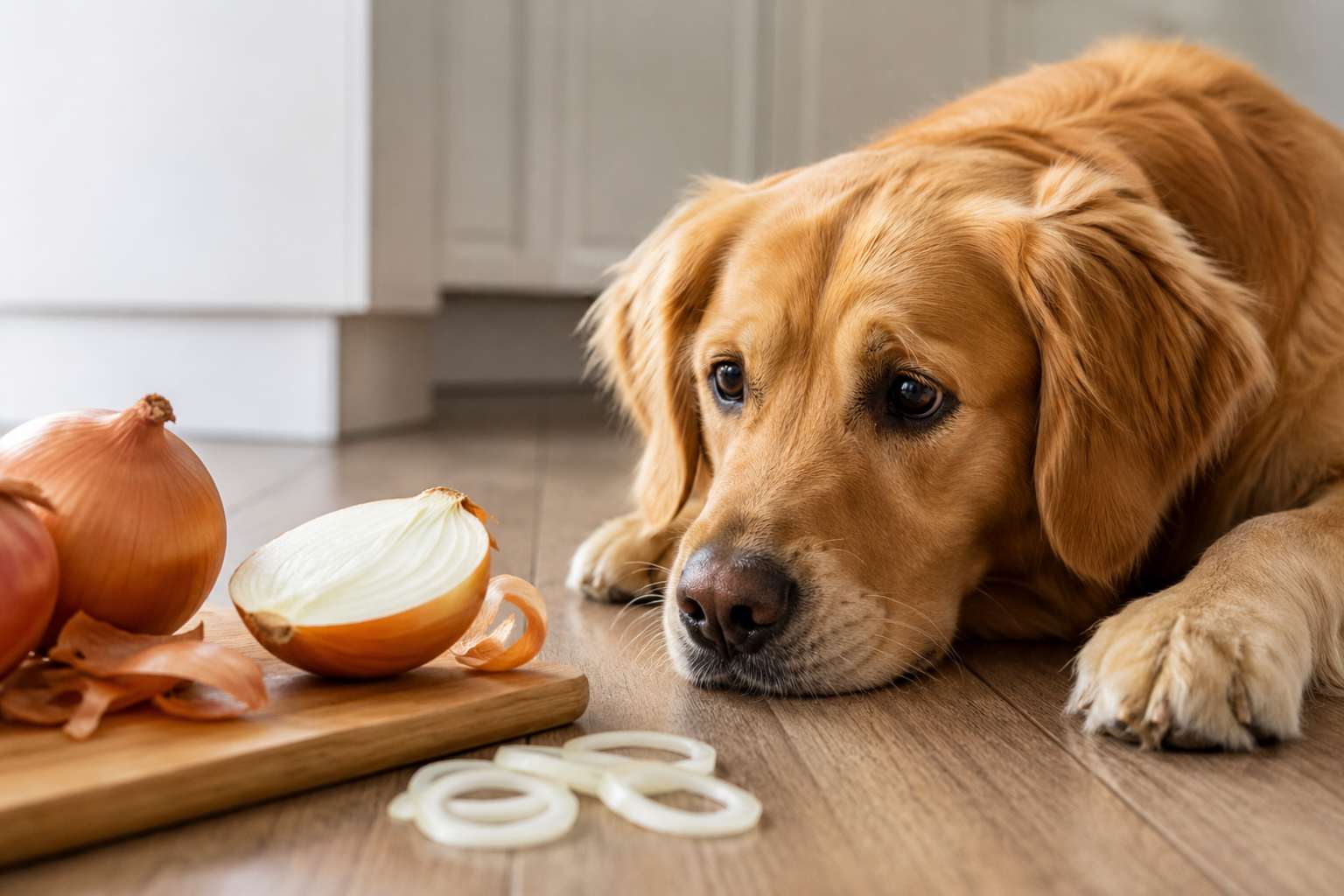
You drop a small piece of onion while cooking dinner, and before you can react, your dog happily eats it. Your first instinct is probably to ask, can dogs eat onions? It’s a common question, but the answer is one every dog owner should know.
Can dogs eat onions? No. Onions are toxic to dogs and should never be included in their diet. Whether they’re raw, cooked, fried, or dried, onions contain compounds that can damage your dog’s red blood cells and lead to a serious condition called hemolytic anemia.
The good news is that knowing the risks and acting quickly can help protect your pet. In this guide, you’ll learn can dogs eat onions, why they’re dangerous, the symptoms to watch for, and what to do if your dog accidentally eats them.
In This Article
Can Dogs Eat Onions?
The answer is simple: No, dogs cannot eat onions safely.
Many pet owners wonder can dogs eat onions if they’re cooked or mixed into food. Unfortunately, cooking does not remove the toxic compounds that make onions dangerous.
Every form of onion should be avoided, including:
- Raw onions
- Cooked onions
- Fried onions
- Onion powder
- Onion flakes
- Dehydrated onions
- Onion soup mix
- Foods seasoned with onions
Even a small amount can cause problems, especially for smaller dogs or dogs with underlying health conditions.
Why Are Onions Dangerous for Dogs?
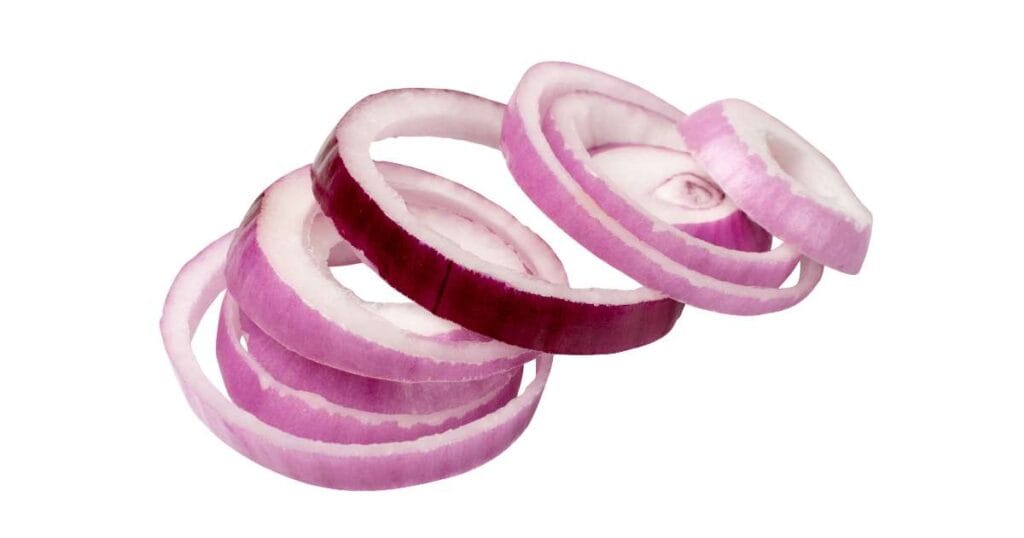
Onions belong to the Allium family, along with garlic, leeks, chives, and shallots. These vegetables contain a compound called N-propyl disulfide, which dogs cannot safely process.
Once consumed, this compound damages red blood cells, reducing their ability to carry oxygen throughout the body. As more red blood cells are destroyed, your dog can develop hemolytic anemia, a potentially life-threatening condition.
Unlike many foods that simply upset the stomach, onions attack your dog’s blood cells, making them one of the most dangerous vegetables dogs can eat.
All Forms of Onion Are Toxic
Some owners mistakenly believe only raw onions are dangerous.
In reality, your dog should never eat:
- Fresh onions
- Boiled onions
- Grilled onions
- Caramelized onions
- Onion powder
- Onion seasoning
- Onion gravy
- Onion soup
- Processed foods containing onions
Onion powder deserves special attention because it’s highly concentrated and often hidden in foods like chips, soups, sauces, baby food, and seasoning blends.
How Much Onion Is Toxic to Dogs?
If you’re still wondering, can dogs eat onions in tiny amounts, veterinarians recommend avoiding them completely. There is no guaranteed safe amount.
Several factors influence how severely a dog may react:
- Body weight
- Age
- Overall health
- Amount consumed
- Type of onion eaten
Small breeds are especially vulnerable because even a small piece can represent a relatively high dose.
Repeated exposure is also dangerous. Feeding your dog leftovers containing onion several days in a row may gradually lead to onion poisoning.
Symptoms of Onion Poisoning in Dogs
The signs of onion poisoning don’t always appear immediately. In many cases, symptoms develop between several hours and several days after your dog eats onions.
Early Symptoms
Watch for:
- Vomiting
- Diarrhea
- Drooling
- Loss of appetite
- Stomach pain
Severe Symptoms
As the condition worsens, your dog may develop:
- Weakness
- Lethargy
- Pale gums
- Rapid breathing
- Fast heartbeat
- Dark or reddish urine
- Collapse
If you notice any of these symptoms, seek veterinary care immediately. Early treatment offers the best chance of a full recovery.
What Should You Do If Your Dog Eats Onions?
If your dog accidentally eats onions, act quickly.
Whenever someone asks can dogs eat onions, the safest advice is to contact a veterinarian immediately rather than waiting for symptoms to appear.
Follow these steps:
- Remove any remaining onions.
- Estimate how much your dog ate.
- Note whether the onions were raw, cooked, or powdered.
- Contact your veterinarian immediately.
- Follow all professional instructions.
- Never induce vomiting unless your veterinarian tells you to.
- Monitor your dog closely for the next several days.
Prompt action can greatly improve your dog’s chances of recovery.
How Is Onion Poisoning Treated?
Your veterinarian will determine treatment based on your dog’s condition and how recently the onions were eaten.
Treatment may include:
- Physical examination
- Blood tests
- Inducing vomiting (when appropriate)
- Activated charcoal
- Intravenous fluids
- Oxygen therapy
- Hospitalization
- Blood transfusions in severe cases
The earlier treatment begins, the better the outcome.
Hidden Foods That Contain Onions
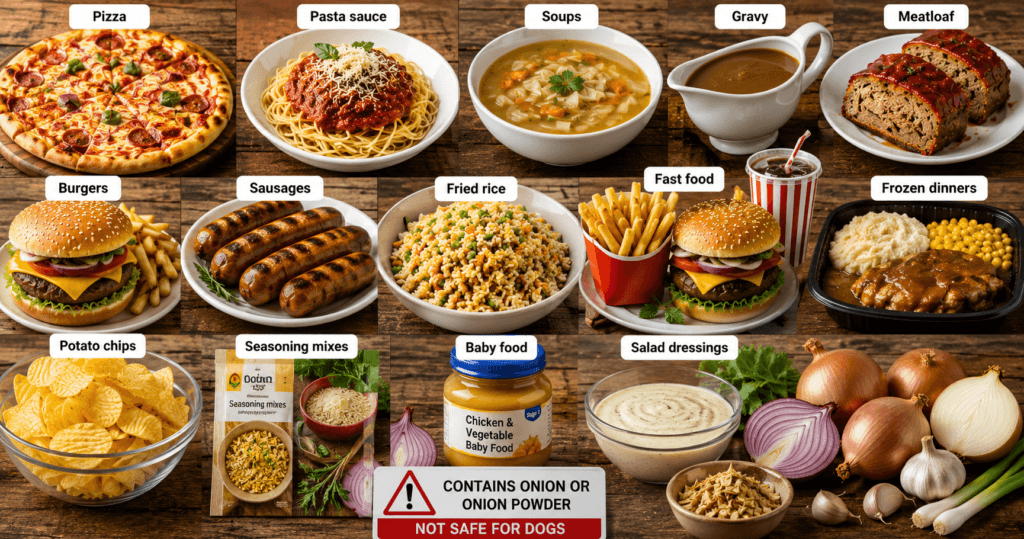
Many owners don’t realize onions are hidden in common foods.
Avoid giving your dog:
- Pizza
- Pasta sauce
- Soups
- Gravy
- Meatloaf
- Burgers
- Sausages
- Fried rice
- Fast food
- Frozen dinners
- Potato chips
- Seasoning mixes
- Baby food
- Salad dressings
Always check ingredient labels before sharing human food.
Safe Vegetables Instead of Onions
If you’d like to give your dog healthy vegetables, choose safer alternatives such as:
- Carrots
- Cucumbers
- Green beans
- Pumpkin
- Sweet potatoes
- Zucchini
- Bell peppers
- Broccoli (small amounts)
These vegetables provide vitamins and fiber without the risks associated with onions.
Frequently Asked Questions
Can dogs eat cooked onions?
No. Cooked onions remain toxic and should never be fed to dogs.
Can dogs eat onion powder?
No. Onion powder is highly concentrated and can be even more dangerous than fresh onions.
Can dogs eat onion rings?
No. Onion rings contain onions, oil, salt, and batter, making them unsafe for dogs.
Can dogs eat onions in small amounts?
No. If you’re asking can dogs eat onions in tiny amounts, the safest answer is still no. There is no completely safe serving size.
Can a dog recover after eating onions?
Yes. Many dogs recover fully when veterinary treatment begins early.
Conclusion
So, can dogs eat onions? The answer is no. Can dogs eat onions safely in any form? Absolutely not. Raw, cooked, fried, dried, and powdered onions all contain compounds that can seriously damage your dog’s red blood cells.
If your dog accidentally eats onions, don’t wait for symptoms to appear. Contact your veterinarian immediately and follow their advice. Quick action can make a significant difference in your dog’s recovery.
The best way to keep your pet safe is to prevent access to onions and foods containing onion powder. By understanding can dogs eat onions and the risks involved, you can make informed choices that protect your dog’s health.
Looking for more expert pet nutrition and safety guides? Visit Fur Friends Club for trusted articles on foods dogs can and can’t eat, healthy treat ideas, and practical tips to help your furry companion live a long, happy, and healthy life.