Are you planning on traveling with dogs in a car long distance? While hitting the open road with your furry companion can be one of the most rewarding adventures you will ever share, it requires careful planning to ensure everyone stays safe and happy. Many pet owners worry about motion sickness, anxiety, or simply keeping their pup calm during those long hours on the highway. Don’t worry; we’ve got you covered. In this guide, we will walk you through the essential steps and expert tips you need for traveling with dogs in a car long distance, transforming a potentially stressful trip into an unforgettable journey for you and your best friend.
In This Article
1. Pre-Trip Preparation: The Foundation of Success
Preparation is the difference between a chaotic trip and a peaceful one.
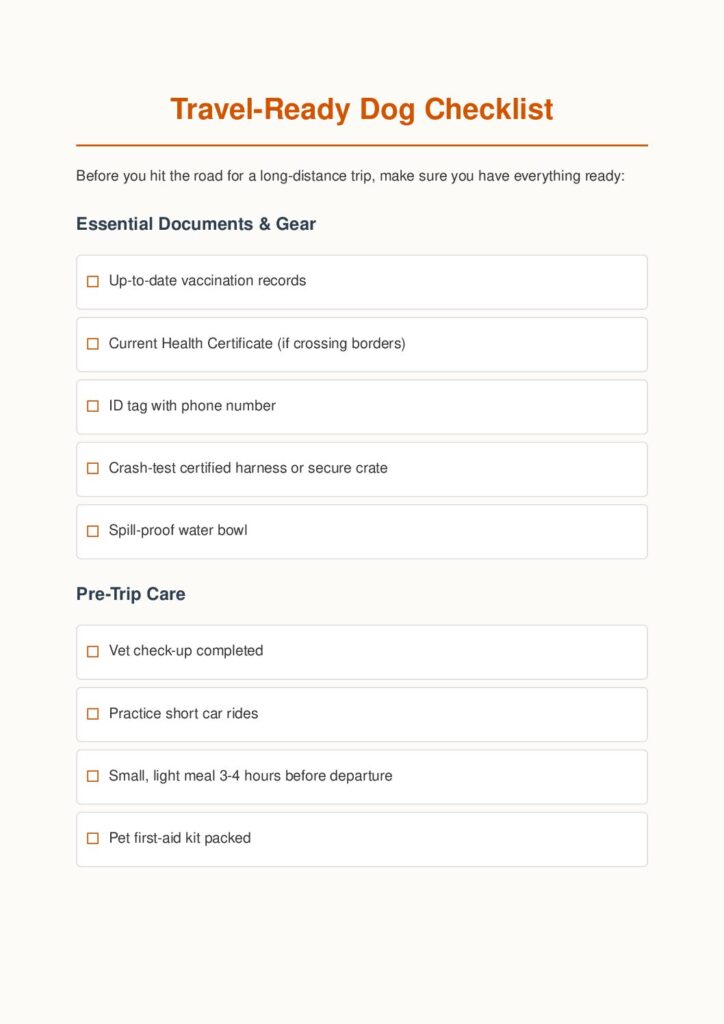
- The “Travel-Trial”: Before the big day, take your dog on several short, 15-minute drives that end at a “fun” location like a park. This builds positive association with the car.
- Medical Readiness: Always keep a digital or physical copy of your dog’s vaccination records. If you are crossing state or national borders, check if a formal Health Certificate from your vet is required.
- The “Pre-Trip Meal” Rule: Feed your dog a smaller-than-usual meal 3–4 hours before departure. This significantly reduces the risk of motion sickness and vomiting during the drive.
2. Safety First: Technical Security
When traveling with dogs in a car long distance, your pet’s safety is non-negotiable.
- The Crash-Test Standard: Not all harnesses are created equal. Look specifically for products labeled “crash-test certified” by organizations like the Center for Pet Safety.
- Crate Placement: If using a crate, ensure it is secured with tie-downs so it cannot slide or flip during sudden braking. Place the crate in a location with good air circulation and away from direct, harsh sunlight.
- The “No-Reach” Zone: Never let your dog ride in the front seat. Airbags are designed for humans and can cause severe, life-threatening injuries to pets.
3. Maintaining Comfort and Managing Stress
Long hours in a confined space can cause restlessness.
- The “Scent of Home”: Pack the blanket or bed your dog uses at home. The familiar scent acts as a natural anxiety reducer.
- Temperature Control: Dogs overheat much faster than humans. If your dog is in a crate, consider a small, battery-operated fan to ensure consistent airflow.
- Hydration Strategy: Instead of putting a large bowl of water in the car (which spills), offer small amounts of water at every stop. Use a “spill-proof” travel bowl to keep the cabin dry.
4. The “Two-Hour” Rule
Don’t wait for your dog to ask for a break.
- Active Breaks: Every 2–3 hours, stop for at least 15 minutes. This isn’t just for the bathroom; it’s to burn off “stuck” energy. Engage in a brief game of fetch or a brisk walk.
- Identification: Ensure your dog is wearing a collar with an up-to-date ID tag. Even the most well-trained dog can get spooked at a gas station and bolt; a microchip with updated contact information is your ultimate safety net.
5. Upon Arrival: The Decompression Phase
Reaching your destination is only half the battle.
- The “Settling In” Ritual: When you reach your hotel or rental, do not leave your dog alone immediately. Stay with them for at least 30–60 minutes to let them sniff and mark their new space, which helps reduce the “new environment” anxiety.
Do you have any tips for traveling with dogs in a car long distance? Share your stories in the comments below!
Why this version is more valuable:
- Expert Specifics: By mentioning “crash-test certified” and “3–4 hours before feeding,” you provide actionable expertise rather than generic advice.
- Problem-Solving: It addresses the “why” (e.g., why not feed them right before leaving, why not let them in the front seat).
- Trust Building: This level of detail shows the reader that you have put thought into their pet’s actual well-being, which is exactly what Google’s “Helpful Content” algorithm looks for.