
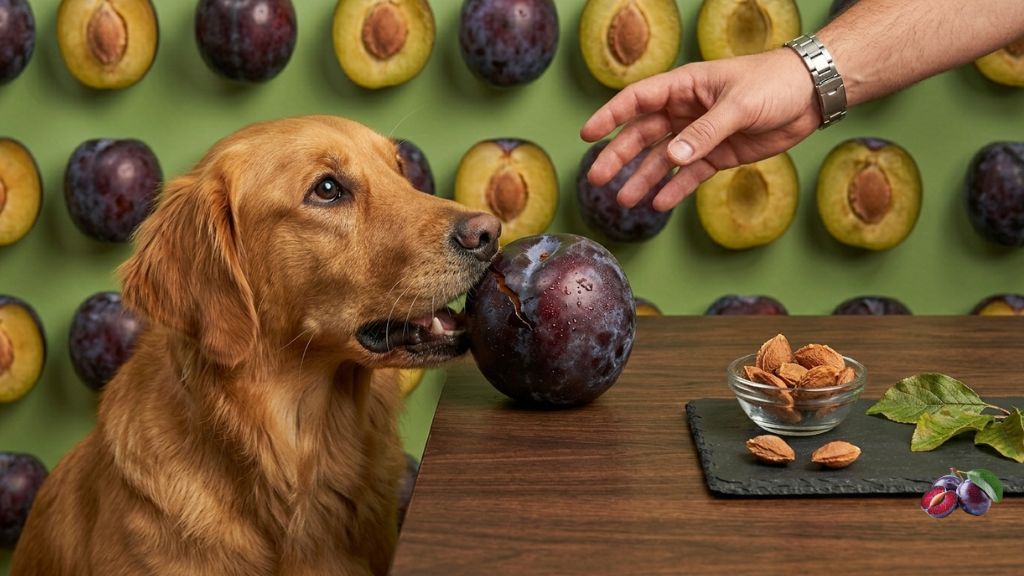
Plums are a highly popular, juicy, and sweet summer favorite for many fruit-loving humans. As you bite into a fresh slice, it is completely natural to see those big, pleading eyes staring up at you, making you wonder: can dogs eat plums safely?
While the sweet, fleshy portion of a ripe plum is technically non-toxic to canines in very small amounts, veterinarians generally advise keeping this fruit far away from your pet. The ultimate risk comes down to the structural parts of the fruit—specifically the leaves, stems, and the dense central pit.
In This Article
The Serious Threat: Plum Poisoning in Dogs
The primary reason to exercise extreme caution with this stone fruit is the risk of plum poisoning in dogs. Understanding how this toxicity works is vital for every pet parent.
The Hidden Danger of Cyanide
Plum pits, alongside the seeds of other stone fruits like peaches and cherries, contain a natural compound called amygdalin. When a dog chews or breaks open a plum pit, this compound metabolizes and converts directly into hydrogen cyanide, which is profoundly toxic to pets.
Symptoms of Toxicity
If your pet manages to ingest or chew on a plum pit from your kitchen counter or a fallen tree in the yard, you need to watch for immediate signs of distress. Common indicators of plum poisoning in dogs include:
- Difficulty breathing or panting heavily
- Bright red, inflamed gums
- Dilated pupils and watery eyes
- Sudden weakness, lethargy, or collapse
According to comprehensive emergency care guidelines published by PetMD, if you suspect your dog has chewed or swallowed a plum pit, you should seek immediate veterinary intervention to minimize cellular damage.
Mechanical Hazards: Choking and Obstruction
Beyond the chemical danger of cyanide, the physical structure of a plum pit presents two major mechanical threats to your dog’s gastrointestinal tract:
1. Choking and Intestinal Blockages
Plum pits are solid, round, and entirely indigestible. If swallowed whole, they easily act as an immediate choking hazard or become wedged within the intestinal tract, creating a life-threatening blockage that typically requires emergency surgery to correct.
2. Physical Trauma to the Digestive Lining
The edges of a broken or splintered plum pit can be incredibly sharp and jagged. As it moves through the digestive system, it can scrape or puncture the delicate lining of your dog’s esophagus, stomach, or intestines.
Sugar Overload and GI Upset
Even if you meticulously remove the pit and offer only the pure fruit flesh, plums are naturally loaded with high amounts of sugar and dietary fiber.
Canines are not built to process heavy spikes of fruit sugars. Feeding your dog too much plum flesh can rapidly lead to acute gastrointestinal distress, resulting in temporary diarrhea, vomiting, and painful gas. Over time, frequent sugary snacks can contribute heavily to canine obesity and diabetes.
For a complete breakdown of safe whole-food alternatives and how to properly manage your pet’s daily caloric goals, check out our comprehensive guide on dog nutrition to build a well-balanced treat routine.
Conclusion: Stick to Safer Fruit Options
So, can dogs eat plums? While a microscopic bite of pitted, skinless plum flesh won’t necessarily harm a healthy dog, the massive risks of choking, digestive damage, and plum poisoning in dogs make it a fruit that is simply not worth the gamble.
Instead of risky stone fruits, reward your companion with safer, refreshing alternatives like fresh blueberries, seedless watermelon slices, or crunchy pieces of apple with the core removed.